Table of Contents
There comes a moment every fall when your boots start feeling like background extras. They do the job, but they do not make you feel like anything. That is exactly the gap sculptural boots were designed to fill. Where a classic boot whispers, a sculptural pair makes a confident statement — and in 2026, these artful silhouettes have moved from runway experiment to wardrobe essential.
If the name sounds intimidating, do not let it scare you off. At its heart, this trend is simply about boots that behave like art: curved heels, molded toes, sweeping lines, and shapes that turn an ordinary sidewalk into a gallery walk. This guide covers it all — what defines the look, who it suits best, how to style it from morning coffee to late dinners, and how to keep your pair looking museum-worthy for years.
What Are Sculptural Boots, Exactly?
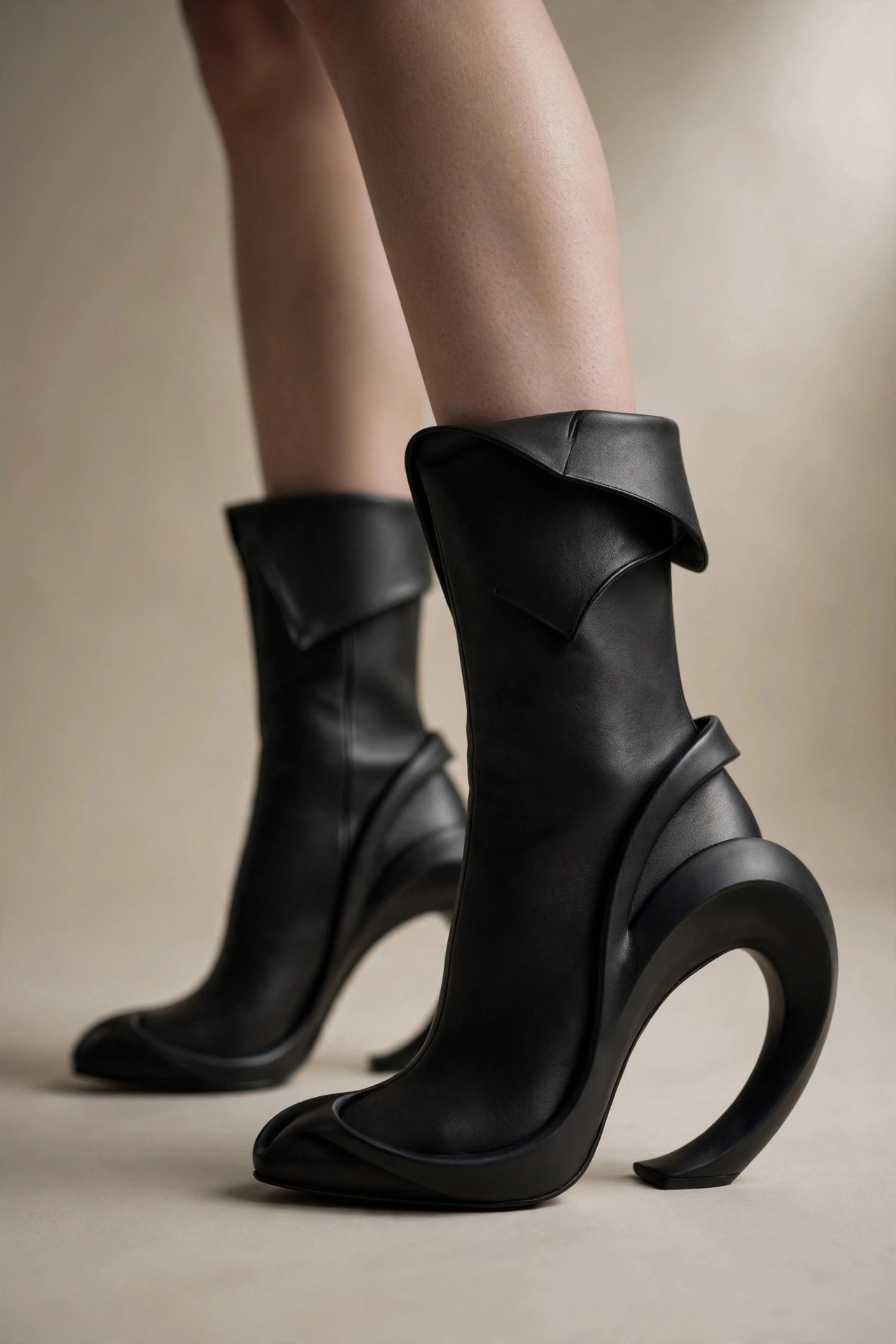
A sculptural boot is any boot where the silhouette itself is the design statement. Think heels shaped like waves or crescents, toes that curve into almond or squared points, and ankle shafts that drape, fold, or flare instead of standing stiffly at attention. The term borrows its drama from sculpture — these boots treat the foot the way an artwork treats its pedestal, building the entire look upward from the ground.
Unlike embellished boots that rely on buckles, studs, or embroidery, sculptural styles win through form alone. The heel might twist like a ribbon, or the whole boot might be cast in a single sweeping line from calf to toe. Because the interest comes from shape rather than decoration, these boots pair beautifully with clean, minimalist clothing — the shoe does the talking so the outfit does not have to shout.
You will find them in every height, from low-cut booties to knee-grazing pairs. The 2026 versions favor wearable engineering: heels that look gravity-defying but feel stable, in molded leather, polished resin, and light-catching lacquered finishes.
Why a Sculptural Silhouette Flatters Almost Every Body
Here is the secret stylists love: a strong shoe silhouette actually balances the body. A curved, architectural heel draws the eye downward and creates a long, continuous line from knee to toe, which reads as leg-lengthening on petite frames. On taller figures, a bold boot anchors the look and gives an outfit the intentional finish it needs.
They also solve a common styling problem — the feeling that simple outfits look unfinished. A black turtleneck, straight-leg jeans, and sculptural ankle boots reads as a deliberate, styled choice rather than a default. If you lean toward minimal clothing but want maximum personality, this is your shortcut. A few fitting notes:
- Petite? Choose a pointed or almond toe to extend the leg line, and keep the shaft slim at the ankle.
- Curvy or plus-size? A chunkier curved heel and mid-calf height balance proportions beautifully.
- Wide feet? Seek molded shapes with a slightly rounded toe box rather than narrow pointed styles.
How to Style Them for Daytime
Daytime is where these boots quietly shine. The trick is contrast: pair the drama of the shoe with relaxed, unfussy clothing. Wave-heeled ankle boots with vintage-wash straight jeans and an oversized knit read effortlessly cool — five-minute effort, lookbook result.
For weekend errands, try them with a midi slip skirt and a cropped jacket; the feminine hemline plus the architectural shoe is a combination that works on almost everyone. If you already love building outfits around boots, our roundup of ankle boot street-style outfits is a great place to start experimenting with bolder shapes.
Keep the rest of your look minimal: one structured bag, simple jewelry, and let the boots carry the outfit. The biggest daytime mistake is competing with the shoe — skip the statement coat when the boots are already the headline.
From Desk to Dinner: Office and Evening Styling
These boots are not just for weekends. For the office, choose black or deep brown leather with a medium curved heel — architectural but polished. They look razor-sharp with tailored wide-leg trousers, where just the sculpted heel peeks out as you walk, or with a knee-length pencil skirt for a modern power look.
Evenings are where a sculptural pair truly earns its place. A strap dress in black, satin, or jewel tones with molded-heel boots eliminates the need for dramatic jewelry — your feet are the accessories. If you are torn between minimalism and full statement, our Chelsea boots outfit guide shows the low-key alternative.
For formal events, lacquered or metallic styles can replace dressy heels entirely. They photograph beautifully, they are far more comfortable than stilettos for a long night, and nobody else in the room will be wearing them.
Proportions and Hemlines: Getting the Balance Right
The golden rule: let the boot be seen. Cropped trousers that end just above the ankle, midi skirts with a side slit, and mini dresses all frame the shoe rather than swallowing it. If your boots stop at mid-calf, keep the hemline at or above the knee to show the full sculptural line.
With wide-leg or full-length trousers, the boot mostly disappears — which wastes the whole point. Instead, tuck slim or straight-leg jeans into knee-high sculptural boots so the molded shaft becomes part of the outfit. A few combinations that never fail:
- Cropped wide-leg jeans and curved-heel ankle boots with a fitted turtleneck
- A satin midi skirt, lacquered sculptural booties, and a sharp blazer
- A tailored mini dress with knee-high molded boots under a long coat
Colors and Materials Worth Investing In
Black leather is the safest first purchase — it goes with everything and the sculptural shape keeps it from looking basic. But 2026 is also the year of oxblood, deep forest green, and warm chocolate, all of which feel rich rather than stark. Metallics — brushed gold and liquid silver — are the evening answer.
Molded smooth leather and lacquered finishes show off curves best; suede softens a dramatic shape for daytime. Just check that the heel, however artistic, has a rubberized sole or heel tip — gallery looks should still survive actual sidewalks.
How to Care for Statement Boots So They Last
Architectural shapes demand architectural maintenance. Store each boot with a boot tree or tissue stuffed inside so the molded shaft keeps its curve. Wipe lacquered finishes with a soft dry cloth, condition smooth leather every few months, and see a cobbler at the first sign of heel-tip wear — sculpted heels are harder to replace than standard ones, so early repair matters.
- Store upright with supports; never fold or crush the shaft
- Rotate wear days to let leather rest and air out
- Add rubber sole protectors if your pair came with smooth leather soles
- Keep away from direct heat, which can warp molded shapes
Are sculptural boots comfortable enough for all-day wear?
Yes — with caveats. Designers now engineer sculpted heels with hidden platforms, balanced weight distribution, and cushioned insoles, so many feel as easy as a standard block heel. Try them on a hard floor, walk for several minutes, and avoid any style where your weight tips forward. A dramatic look should never mean a painful day.
Can petite women pull off sculptural boots?
Absolutely. Choose a heel with a slim, elongated curve rather than a wide chunky one, and let a pointed or almond toe extend your leg line. Matching the boot color to your tights or trousers creates one unbroken line that reads as height.
Can I wear them to the office?
In creative and business-casual workplaces, yes — choose architectural shapes in classic colors like black, espresso, or navy, with heel heights under three inches. For very conservative offices, keep them as your commute-to-dinner shoe and switch at your desk. When in doubt, the sleeker the curve, the more professional it reads.
How do I keep a statement boot from looking costume-y?
One statement per outfit is the rule: if the boots are the art, wear clean lines, neutral colors, and minimal jewelry elsewhere. Avoid pairing them with other theatrical pieces like oversized jewelry or avant-garde coats — restraint around the shoe is what makes it look expensive.
The Takeaway
Sculptural boots prove the right shoe does more than complete an outfit — it gives the whole look a point of view. Whether you start with a subtle curved heel for the office or go full gallery-piece for a night out, one well-chosen pair will become the hardest-working item in your closet.
Start with black, style them simply, care for the shape, and let the sidewalk be your exhibition. 2026 is the year to stop wearing background shoes.